I’ll confess that, in the Jurassic world we’ve been living in lately, it took me a minute to downshift into the epoch The End of Oak Street needs before it can properly unfurl its charms.
And no, I don’t mean I short-circuited at the sight of children making eye contact with adults instead of phones or grown men walking around in shorts that appear to have been cut off during an emergency. Director David Robert Mitchell has the nostalgia knob on the audience’s Walkman cranked to 10 before anyone even takes a seat, and that part of this Spielberg B-side’s appeal isn’t—and shouldn’t be—subtle.
The ubiquitous wood paneling. The aggressively analog childhoods. Mitchell is perfectly happy to bonk you over the head with 1980s iconography until you smell the Aqua Net.
But the meta-trick requires you to be more settled in your seat to take it in.
Because Oak Street isn’t merely nostalgic for the way movies looked back then; it’s nostalgic for the way they behaved.
The film introduces its not-so-surprising guests with restraint that almost reads like it’ll be one of those “monster only heard from offstage” horror movies. Dinos descend on small-town America so quietly that it feels like Mitchell is gonna spend most of the movie playing coy—rustling bushes, rattling windows and keeping everything just out of frame until everybody’s completely wigging the fuck out.
But then, only a few minutes later, there one is. Full body. No thunderous musical cue.
It just…comes out.
Is John Williams okay?
And that’s when the film’s more novel throwback clicks. Mitchell isn’t simply recreating the block parties, clothes and consumer electronics of another era. He’s recreating an era of filmmaking that trusted the audience enough not to put three exclamation points after everything.
And man, is it tubular.
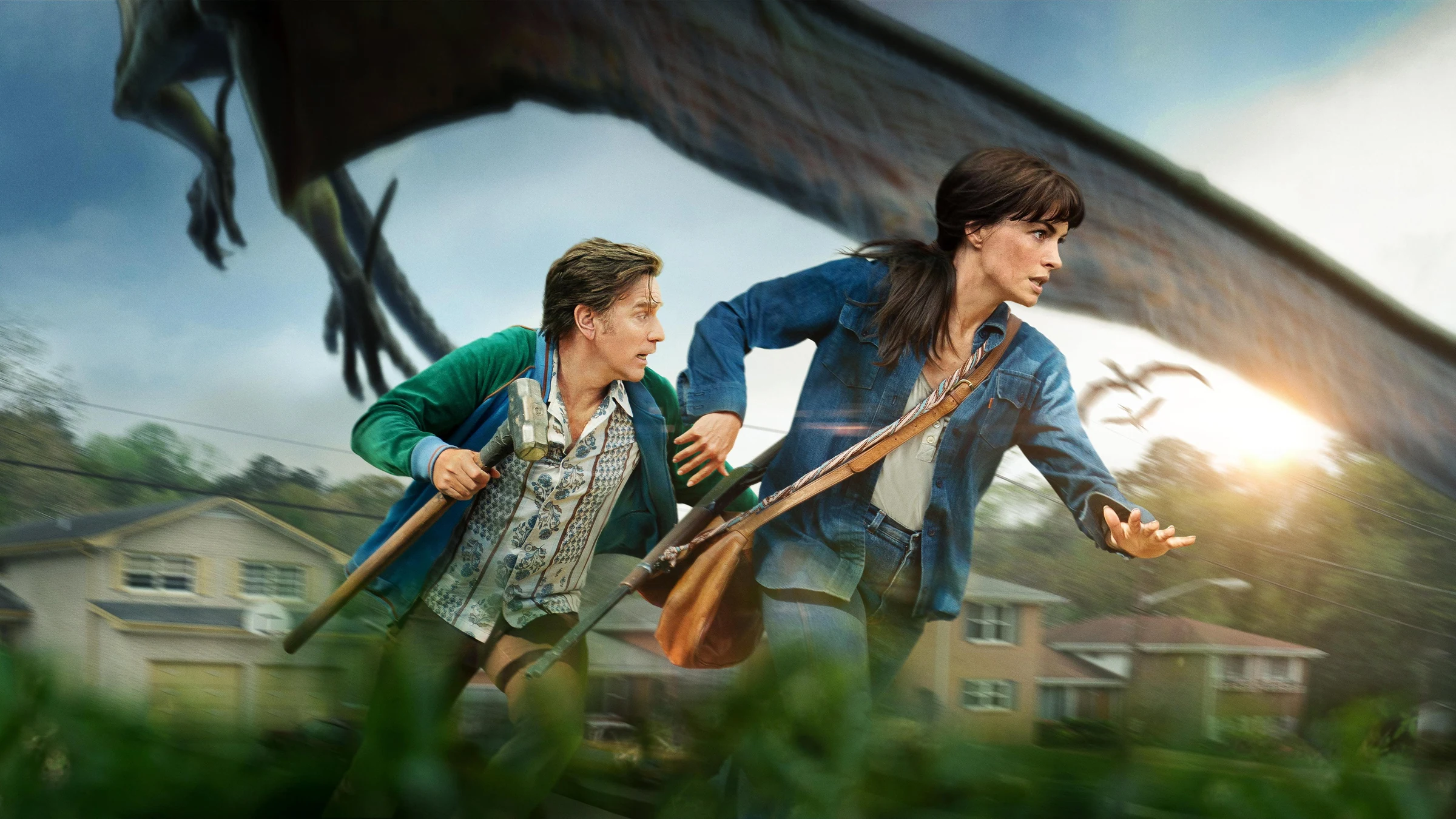
As we begin to unpack who these characters are, Greg Platt (Ewan McGregor) and his wife Denise (Anne Hathaway) aren’t doing a particularly convincing job of pretending everything on Oak Street is fine. Hathaway plays Denise in such full-on Mom Mode that half her early dialogue virtually invites the audience to whine “Mooooom” back at the screen before she can bop them on the nose. She knows her family’s standard-issue suburban existence isn’t working the way it’s supposed to. Her husband seems less concerned that she knows than he is terrified she might eventually figure out exactly why.
Luckily, nothing restores perspective to a strained marriage quite like several tons of prehistoric relationship counseling arriving through a wormhole.
What follows may be the only thing that can follow when a dino is chasing someone through a movie, but it works wonders because Mitchell never lets the dinosaurs become the only thing the Platts need to figure out. They’re the Jurassic disruption, the Platts’ common enemy and occasionally the punch line, but the movie remains interested in the people whose spectacularly ordinary problems have just been interrupted by spectacularly bigger ones.
In short order, you realize that enjoying The End of Oak Street means enjoying the ride it takes you on twice.
The obvious trip is backward, into the loud-bikes-and-boomboxes landscape it wears proudly on its sleeve. The more subtle nostalgia evoked by the film, though, is a nod toward the kind of moviegoing we may not have realized we missed. Back when a film could be spastic, scary, funny or totally righteous without inflating every moment into a goddamn Event.
Sometimes the monster just needs to be outside the house and it’s enough to tell the story of how your old man dealt with it after it scared the shit out of you.
← Back to reviews