

Oof. Do I have a movie for you to avoid.
By Any Means can’t decide what kind of movie it wants to be. And that’s with history having already written much of the screenplay for it.
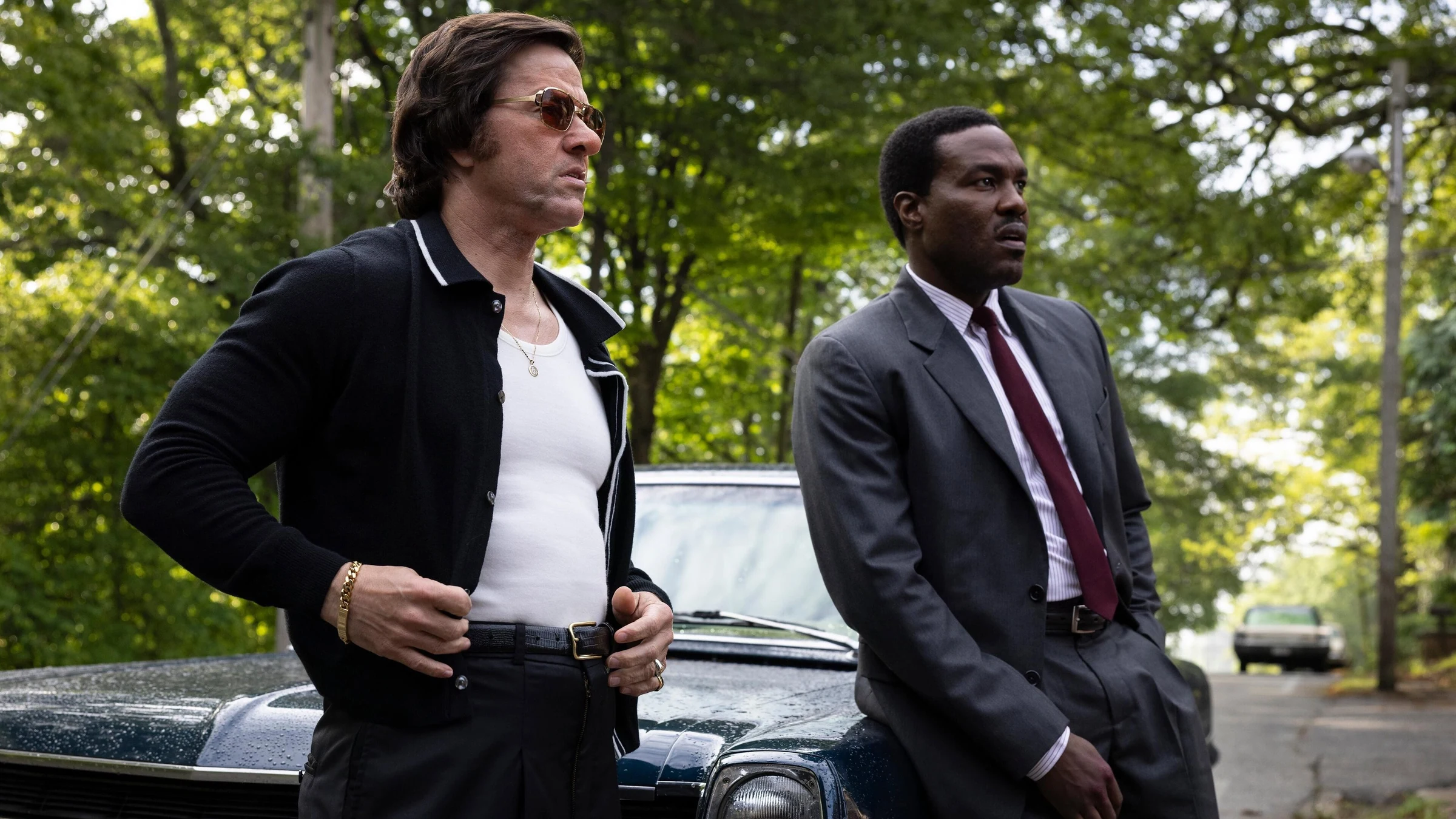
Vernon F. Dahmer Sr. (Giancarlo Esposito) was an NAACP leader in Hattiesburg, Mississippi. His house was burned down in 1966 in an attack by the KKK, resulting in his death shortly after from lung damage and burn injuries. Gregory Scarpa Sr. (Mark Wahlberg) was a hit man for the Colombo crime family and, for over 25 years, an FBI informant. By Any Means is technically not his first appearance in a Hollywood film—FBI Agent Monk in Mississippi Burning is also based on Scarpa—but both films’ choice to highlight Scarpa’s work in Mississippi leans on the more tenuously established part of his FBI record.
Wayne Strider (Yahya Abdul-Mateen II) is the film’s invention, but details of his case are not—a gun dropped at the crime scene helped advance the real investigation, and Sam Bowers was eventually convicted of Dahmer’s murder thirty-two years after his death.
With that much of the story already written, the only further unifying vision the filmmakers brought to it was a release date. The score test drives neo-noir, with lonely trumpet soliloquies introducing the early scenes and returning whenever tension needs announcing. Once the buddy cop two-hander takes over, a grab bag of vintage soul, gospel inflected R&B, and country recordings appears to give those stretches a jaunty, oddly carefree bounce.
The opening visual choices likewise reflect the screenwriters’ decision to just dump the fucking mood board into the final cut. The film starts off by feeding us news clippings establishing Scarpa’s FBI backstory, then immediately bins that approach for our introductory look at his hands on style, timing the final blows of the beating to the title card’s three-punch reveal.
Some early reviews have found nuance in Abdul-Mateen and considerably less to venerate in poor Marky Mark. But blaming Wahlberg for the film’s tonal limitations is like blaming a nail gun for how terrible your house is laid out. Scarpa is hermetically sealed from the surrounding tonal chaos by design. He’s a one-dimensional character hired to beat the bad guys into less-dimensional pulps. Strider, meanwhile, has to come around to the civic benefits of pounding the shit out of people, leaving Abdul-Mateen to make the film’s underlying confusion look like character development. Scarpa is just the product demo.
The notion that the grating juxtaposition of these two investigatory approaches is the whole point has been tossed around in defense of the thing with some regularity. But purposefully plugging in two odd couple leads doesn’t make the film’s lurches between a period drama about racism and exploitation schlock a grand artistic strategy. It just makes it clear the marketing department had limited means to spin this shit once filming wrapped.
And 107 minutes is plenty of time to make Strider’s takeaways from this partnership feel earned. The film efficiently explains how Scarpa got here but otherwise rushes its characters into decisions it hasn’t bothered to make plausible. Scarpa gets a backstory. Strider gets stage directions to look less and less regretful.
If you brave this thing, you might find yourself wishing for it to settle into nothing more than Scarpa’s door-to-door distribution of mob justice on the KKK guys with Strider falling into lockstep behind him.
I did. It’s the only part of By Any Means that approaches enjoyable.
Don’t beat yourself up over it. Whether the blows come from Scarpa’s fists or By Any Means’ wild tonal swings, we’ll all admit to something after enough head trauma.
← Back to reviews